

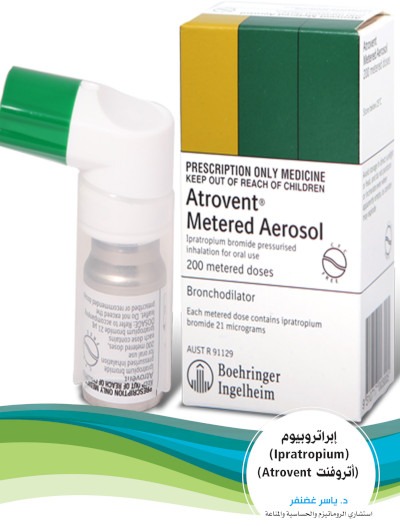
This medication belongs to the group of drugs known as antimuscarinic bronchodilators. Ipratropium is used to treat symptoms of chronic bronchitis and some cases of asthma. Bronchodilators work by opening the air passages in the lungs so that air can flow into the lungs more freely. By doing so, they help relieve symptoms of cough, wheezing, and shortness of breath.
In what conditions is ipratropium inhaler used?
Ipratropium is used to treat chronic obstructive pulmonary disease (COPD) and asthma.
In which cases should ipratropium not be used?
Do not use ipratropium in the following cases:
-
If you are allergic to ipratropium or any of its other components.
-
If you are allergic to similar medications containing atropine or other related drugs.
-
During pregnancy, possible pregnancy, or breastfeeding.
How often is it used?
The usual initial dose of this medication is two to four inhalations per day. Patients may need an additional inhalation when necessary, but the total number of inhalations should not exceed 12 per day.
What are the possible side effects of this medication?
-
Allergic reactions – signs may include skin rash and itching. In severe cases, symptoms and signs include swelling of the mouth and face, sudden breathing difficulties, and low blood pressure.
-
Throat tightness.
-
Palpitations (rapid or irregular heartbeat), or tachycardia.
-
Increased heart rate or irregular heartbeats such as atrial fibrillation.
-
Headache and dizziness.
-
Dry mouth, nausea, stomach pain or discomfort.
-
Cough and throat irritation only when using the medication.
Uncommon side effects:
-
Itching and skin rash.
-
Unexpected chest tightness and throat swelling.
-
Blurred vision, dilated pupils, glaucoma, and eye pain.
-
Diarrhea, constipation, or feeling unwell.
-
Cracks in the mouth or lips.
What about using Atrovent during pregnancy or breastfeeding?
There are no adequate and well-controlled studies of Atrovent’s effect on pregnant women. Atrovent should not be used during pregnancy unless clearly needed. It is not known whether the active ingredient, ipratropium bromide, is excreted in human milk. Caution should be exercised when using this medication in breastfeeding mothers.