

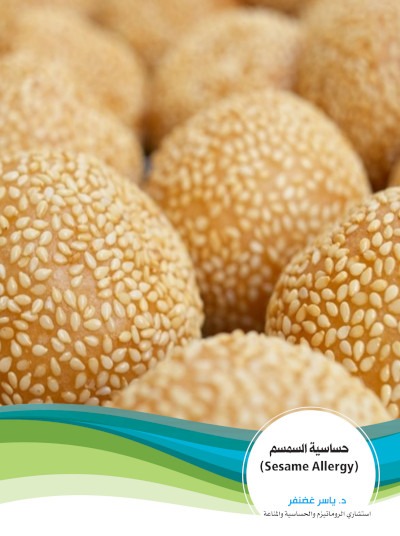
What is sesame allergy?
A recent study has shown that sesame allergy ranks as the fourth most common food allergy in children worldwide, after milk, eggs, and peanuts. Sesame allergy appears to affect all ages, meaning that this type of food allergy is not usually characterised by rapid growth.
What foods and products contain sesame seeds?
-
Bread, breadcrumbs, steaks, cereals, and crackers.
-
Food spreads, for example, hummus.
-
Rice seasonings, noodles, shish kebab, stews, and fast‑fried foods.
-
Sesame oil and sesame salt.
-
Tahini and veggie burgers.
What about sesame oil?
-
Unrefined sesame oil is used in food products, and as a result, it contains allergenic substances dangerous for people with sesame seed allergy.
-
Sesame oil is also used in pharmaceutical products and cosmetics.
-
Sesame oil used in the pharmaceutical and cosmetic industries can cause allergic contact dermatitis.
-
Some cosmetics that have undergone allergy testing also contain sesame seeds. Although refined sesame oil is used in these products, severe allergic reactions have been reported.
-
Surprisingly, some cosmetics that have been subjected to allergy tests contain sesame, which may be labelled as Indian sesame, so caution and care should be taken when reading the labels of these cosmetic products.
What are the symptoms of sesame allergy?
For the majority, a reaction after consuming sesame, or applying any form of it to the skin as with cosmetics, may lead to blisters, swelling, asthma, skin rash, hay fever, and nasal congestion.
Does sesame allergy put a person at risk of developing allergy to other foods?
-
Because the biochemical substances that cause sesame allergy are similar to those of peanut allergy, people with sesame allergy are at risk of having allergic reactions from eating peanuts, and vice versa.
-
Because there is a close relationship with peanuts, most people do not realise that peanut allergy may also develop in the future.
-
There also appears to be cross‑reactivity between the allergens in sesame seeds and barley, kiwi, poppy seeds, and various nuts such as hazelnuts, black walnuts, cashews, macadamia nuts, and pistachios.
-
Rye and kiwi, along with various tree nut allergens, may also be an issue for those with sesame allergy in the future.
-
Some other nuts may also be of concern, including walnuts, hazelnuts, and macadamia nuts.
What should you do when you have a sesame allergy?
Accidental exposure to sesame is increasing, and it is vital for those at risk to carry a life‑saving prescription that usually contains adrenaline (epinephrine) for self‑injection, for example EpiPens.