

What is Anaphylaxis?
Anaphylaxis (anaphylactic shock) is a severe and potentially fatal allergic reaction. Anaphylaxis is an inappropriate response of the body’s immune system to an allergen, such as food, which is mistakenly perceived by the immune system as a threat to the body. Anaphylaxis must be treated as a medical emergency and requires immediate treatment.
What are the symptoms of anaphylaxis?
Symptoms of anaphylaxis usually begin between three and sixty minutes after exposure to an allergen. When you have an anaphylactic reaction, you may feel unwell, dizzy, or faint due to a sudden drop in blood pressure. Narrowing of the airways can occur at the same time, with or without a drop in blood pressure. You may experience any of the following symptoms:
-
Swelling of the eyes, lips, eyelids, hands, feet, or other areas of the body.
-
Itching.
-
Redness of the eyes and a strong urge to rub them.
-
Change in heart rate.
-
Skin itching or rash.
-
Loss of consciousness due to a sharp drop in blood pressure.
-
Abdominal cramps, vomiting, and diarrhea.
-
Nausea and fever.
What are the triggers of anaphylaxis?
Triggers include: (1) Food: nuts, shellfish, eggs, milk, wheat, soy, sesame seeds. (2) Medications: penicillin and some other antibiotics, NSAIDs such as aspirin and ibuprofen, narcotics, and some painkillers. (3) Bee and insect stings. (4) Latex. (5) Exercise. (6) Exposure to cold air or cold water.
What are the risk factors for anaphylaxis?
-
If you have previously experienced anaphylaxis, your chances of having serious allergic reactions increase.
-
Future allergic reactions may be more severe than previous ones.
-
People with asthma are at increased risk of anaphylaxis.
-
If you have family members who have experienced exercise-induced anaphylaxis, your risk of this type of anaphylaxis is higher than for someone without a family history of anaphylaxis.
What is the treatment for anaphylaxis?
During anaphylaxis, the emergency medical team may perform CPR if breathing or heartbeat stops. Medications given may include:
-
Epinephrine to reduce your body’s allergic response.
-
Oxygen to help relieve shortness of breath.
-
Intravenous antihistamines and cortisone to reduce airway inflammation and improve breathing.
-
Beta agonists, for example, Ventolin, to relieve symptoms of shortness of breath.
Can anaphylaxis be avoided?
If you have an allergic reaction, doctors will perform tests to identify the nature of the allergy and the substances you react to. Once you know the triggers behind your allergic reactions, you can take steps to avoid them.
Second File: How to Use Diskus Devices
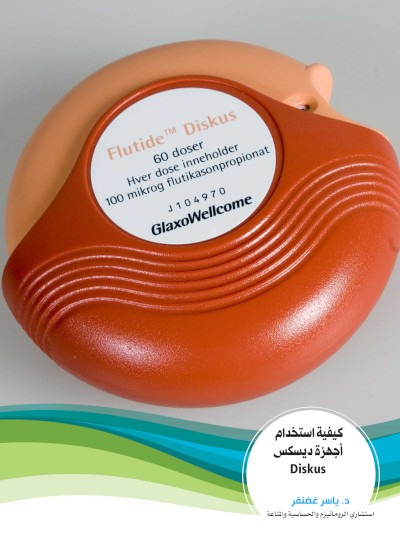
How to Use Diskus Devices
Dr. Yasser Ghazanfar
Consultant in Rheumatology, Allergy, and Immunology
Taking a dose from the DISKUS inhaler requires 3 simple steps: Open, Click, Inhale.
(1) Open:
Hold the DISKUS device in one hand and place the thumb of your other hand on the thumb grip. Push your thumb away from you as far as it will go until the mouthpiece appears and clicks into place.
(2) Click:
Hold the DISKUS device level and horizontal with the mouthpiece facing you. Slide the lever away from you as far as it will go until it clicks. The DISKUS device is now ready for use. Each time the lever is pushed back, a dose is ready for inhalation.
(3) Inhale:
-
Before inhaling your dose from the DISKUS device, exhale as much as is comfortable while holding the DISKUS device away from your mouth.
-
Place the mouthpiece on your lips. Breathe in quickly and deeply through the DISKUS device, not through your nose.
-
Remove the DISKUS device from your mouth. Hold your breath for 10 seconds or as long as is comfortable for you. Exhale slowly.
-
Place your thumb on the thumb grip and slide the thumb grip back toward you as far as it will go. The DISKUS device will close, and the lever will return to its original position automatically. The DISKUS device is now ready for your next scheduled dose.
Remember:
-
Do not exhale into the DISKUS device at all.
-
Always operate and use the DISKUS device in a level, horizontal position.
-
To avoid wasting doses, do not close the DISKUS device, tilt it, or tamper with the lever.
-
Do not use the DISKUS device with a spacer.
-
After inhalation, rinse your mouth with water without swallowing.
-
Do not wash the mouthpiece or any part of the DISKUS device; keep it dry.
-
Always store the DISKUS device in a dry place.
-
Never take an extra dose, even if you feel you did not receive the dose.