
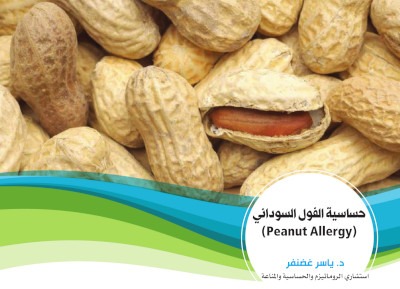
Peanut allergy is one of the most common types of food allergy in children; it persists throughout their lives and often worsens. Children with peanut allergy cannot tolerate standing near or smelling peanut butter, may refuse to touch it, and do not wish to stay in a place where peanut butter is being eaten.
Peanut allergy is a reaction that occurs immediately after a person eats peanuts or one of their products, caused by the presence of antibodies sensitive to the proteins in peanuts. In most cases, evidence of peanut allergy is the occurrence of symptoms immediately after eating peanut products. The antibodies that are sensitive to peanuts can be confirmed by a skin prick test or blood test. It is very important to know that symptoms vary from one child to another, indicating that they suffer from this type of allergy, so it must be confirmed or ruled out through tests focused on peanut consumption carried out in the hospital. The doctor will discuss this with the child’s parents if he deems it necessary.
Researchers have identified several risk factors for peanut allergy that cannot be controlled. These include a genetic predisposition to hypersensitivity, particularly in parents (or either parent having a history of allergy), and the presence of certain types of skin diseases, such as eczema. Parents can help protect children by avoiding products containing peanut oil and not feeding infants substances that include this material. Current recommendations for families with a history of allergy are that women should not eat peanuts during pregnancy or breastfeeding, and that children should not be fed any foods containing peanuts until they reach the age of three.
What are the symptoms of an allergic reaction to peanuts?
An allergic reaction to food usually begins within 2‑4 hours. An immediate‑type allergic reaction to foods generally includes: hives or spots around the mouth which may spread to the rest of the body, immediate runny nose and sneezing, itchy eyes, coughing and choking, wheezing and difficulty breathing, cramps, vomiting and diarrhoea. The allergy may stop at any stage, or may progress to anaphylaxis and death.
What should I do if my child has an allergic reaction to peanuts?
If symptoms of an allergic reaction to peanuts begin, then use an EpiPen (a brand name for an auto‑injector containing the hormone epinephrine), used to treat severe or serious allergic reactions. The dose is fast‑acting and can be self‑administered by intramuscular injection by the patient themselves if any warning symptoms of an allergic reaction appear, to avoid anaphylactic shock immediately. As soon as any allergy symptoms develop, the patient should then be taken to hospital immediately, preferably by ambulance.
What other foods contain peanuts as part of their ingredients?
-
Peanut butter can be used as a “glue” to hold foods together, for example egg rolls and rice squares.
-
Peanut butter or peanut flour can be added to barbecue sauce or other foods, such as chilli, plum sauce, curry sauce, and pasta.
-
Peanut butter processed on the same machine may contaminate similar foods that do not contain peanuts, for example sweets, breakfast cereals, cheese, biscuits, chocolate and candy, chocolate‑covered raisins, and ice cream.
What is the treatment for peanut allergy?
At present, there is no cure. Avoiding all peanut products is the only safe way to deal with peanut allergy. Labels indicating that products contain peanuts must also be read carefully. Peanuts are commonly found in various types of goods, foods and sweets; therefore, this should be discussed with restaurant staff when eating out.
Many allergy specialists also recommend that individuals with peanut allergy avoid nuts (e.g., almonds, cashews, walnuts) and products made on machines that process peanuts, due to the risk of contamination with this food substance.