

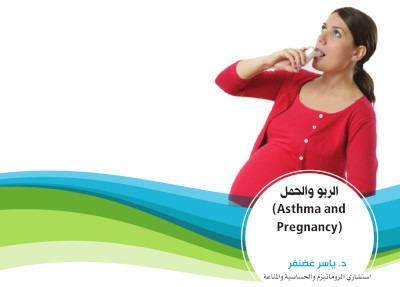
Managing asthma during pregnancy is a complex matter. There are many medications commonly used to treat asthma that may not be used during pregnancy due to the risk they could pose to the fetus.
Asthma, if left uncontrolled, can lead to serious health problems for pregnant women and their fetuses. Controlling asthma is of great importance for maintaining the health and wellbeing of both the mother and the fetus. A stepwise approach to asthma care is recommended, similar to that used in asthma treatment and general guidelines for non-pregnant children and adults. Within this approach, the medication dose is increased even in severity if necessary, and reduced when possible, depending on the asthma condition.
Can Women Who Suffer from Asthma Have a Safe Pregnancy?
Yes, through proper asthma management you can keep it under control and have a healthy baby.
How Does Uncontrolled Asthma Affect Pregnancy?
Maternal complications include several serious problems such as Preeclampsia, Gestational Hypertension, Hyperemesis Gravidarum, Vaginal Hemorrhage, Toxemia, and Induced & Complicated Labors.
During Which Period of Pregnancy Will a Change in Asthma Occur?
Asthma tends to worsen during pregnancy in the late second trimester and early third trimester. However, a woman may experience fewer symptoms during the last four weeks of pregnancy. Asthma is rarely troublesome during labor and delivery in women who have adequately controlled their asthma throughout the pregnancy.
How Does Uncontrolled Asthma Affect the Fetus?
Fetal-related complications include an increased risk of Perinatal Mortality, intrauterine growth retardation, premature birth, low birth weight, and Neonatal Hypoxia.
How Do I Monitor My Baby During Pregnancy?
Close and careful follow-up is of great importance in cases where asthma is not controlled or when asthma attacks are severe, in addition to a non-reassuring fetal test or other risk factors in delivery.
An ultrasound device used at an early stage (12 to 20 weeks) provides a benchmark for monitoring fetal growth.
Electronic means should be used to measure the fetal heart rate and an ultrasound imaging device to observe fetal behavior in the third trimester as needed to ensure fetal safety.
Daily recording of fetal activity and movement should be encouraged.
Immediate fetal assessment in the later stages of pregnancy is indicated in terms of the possibility of asthma worsening, poor response to treatment, or oxygen deficiency.
Is Taking Asthma Medications Considered Safe?
The use of cortisone during pregnancy is considered a controversial issue because animal studies have shown an increased risk of cleft palate as a result of taking high doses. Reports of more than 1,000 pregnancies have failed to reach a conclusive proof, but it is clear that cortisone has little effect on developing fetuses. The use of Inhaled Glucocorticosteroids during pregnancy is considered safe due to bioavailability. Two studies showed that the use of inhaled or oral cortisone to treat acute asthma during the first three months was not associated with an increased risk of Teratogenicity in 101 pregnancies. There was also a slight increase in the risk of premature birth and low birth weight, which may be attributed to the severity of the mother’s illness.
A study conducted on 296 pregnant women indicated that Cromolyn Sodium did not play a role in increasing the risk of teratogenicity. Currently, we have no data on the safety of using Nedocromil Sodium as an anti-inflammatory drug for the treatment of asthma during human pregnancy.
The use of Theophylline to treat asthma has declined in recent times, mainly due to concerns about adverse effects and the increased use of inhaled and oral cortisone. If the necessity of using Theophylline during pregnancy is established, however, it can be used safely.
Can I Continue Taking Allergy Shots During Pregnancy?
Allergy shots, or immunotherapy, are considered safe treatments during pregnancy. As always, the allergy specialist supervising your condition will monitor the dosage to minimize the risks of an allergic reaction to the injections.
Can I Breastfeed My Baby If I Am Taking Asthma or Allergy Treatments?
Breastfeeding is considered one of the good ways to boost your baby’s immunity and is highly recommended. It is possible to continue taking the treatments recommended for use during pregnancy, as the breastfeeding infant receives only a small amount of the effects of the mother’s treatments through breast milk compared to what was present inside the mother’s womb.