

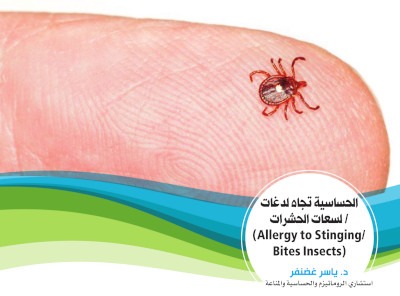
What is the Difference Between Bites and Stings?
Venomous insects attack as a defense mechanism by injecting a painful, toxic substance through stinging. Non-venomous insects resort to biting and sucking in order to feed on your blood. When a bee stings, it leaves the stinger and the attached venom sac so that it continues pumping venom through the stinger until the sac is empty or is removed. Wasps and hornets do not leave their stingers behind, and they are capable of stinging multiple times.
What Can Happen After a Bite or Sting?
1) Small Local Skin Reaction
An insect sting causes sharp pain, and a red spot along with a small area of swelling appear quickly after the sting.
An insect bite: You may not even notice the bite; however, the insect’s saliva can trigger the following allergic skin reactions:
- Irritation and itching at the bite site.
- A small itchy bump lasting 24 hours after the bite.
- The appearance of a wheal — a hard, raised spot on the skin resulting from intense irritation that is extremely itchy. It can appear immediately after the bite or sting.
2) Localized Allergic Skin Reaction
A localized reaction causes swelling at the site of the sting. This grows larger and larger over several hours, then gradually goes away over a few days. The size of the swelling can vary, but it can become several centimeters in length.
This type of allergic reaction may also cause one of the following problems:
- Itching of the skin in many parts of the body, followed by an itchy rash that can appear anywhere on the body.
- Swelling of the face that may extend to the lips, tongue, throat, and upper airways.
- Abdominal cramps and nausea.
- Wheezing or difficulty breathing due to an asthma attack or swelling of the throat.
What is the Treatment for an Insect Bite or Sting?
Remove the stinger that has lodged in the skin as quickly as possible.
The sooner you remove the stinger, the better — use anything suitable to get rid of it quickly.
If symptoms of a generalized allergic reaction develop, you must call an ambulance immediately.
If the use of an adrenaline dose is unavoidable, use it according to its instructions immediately.
If there is a localized allergic reaction, you should:
- Take an antihistamine tablet as soon as possible.
- Apply a cold compress to relieve pain and help reduce swelling.
- Painkillers such as Paracetamol or Ibuprofen may be taken to help relieve pain.
- See a doctor if the swelling is severe.
What Are the Chances of Having a Serious Allergic Reaction?
Most people do not develop an allergic reaction from insect bites or stings.
About 3 out of every 100 people who are stung develop this type of allergic reaction.
What Can I Do to Avoid Insect Bites and Stings?
- Wear long-sleeved clothing and long trousers in areas where insects are prevalent.
- Avoid brightly colored clothing, cosmetics, perfumes, or hair sprays, which attract insects.
- Apply insect repellent to exposed areas of skin.
What Types of Toxins Are Found in the Marine World?
Venomous fish — including sharks, stonefish, stingrays, and other species that have venom glands in the spines on their fins or tails — are extremely dangerous when their venom is encountered. This type of fish causes severe pain, nausea and vomiting, and other symptoms. Immediate treatment in such cases includes:
- Returning to shore.
- Using hot water to neutralize the toxins.
- Applying Lidocaine ointment to control pain.
What About Jellyfish and Other Sea Creatures?
Jellyfish sting through stinging cells located in their tentacles. These toxins are released upon contact with a person, and repeated exposure can be fatal. There are several types of jellyfish, among the most dangerous of which is the Box Jellyfish.
This type of jellyfish is found in warm oceans (the Pacific, Atlantic, and Caribbean), Thailand, Australia, the Philippines, and Japan. Symptoms of exposure to its venom include:
- Immediate sharp pain.
- Heart problems and respiratory arrest.
Immediate treatment consists of getting out of the water and seeking help.
What Are the General Principles for Treating Jellyfish Stings?
- Applying cold compresses.
- Applying vinegar to prevent further stinging.
- Pressure/immobilization to reduce the spread of venom.